
"A useful casino review starts with what can be verified. Before you look at the welcome offer, check the withdrawal rules, and before you place a bet, understand how the house edge actually operates." - Claire Bennett, Senior iGaming Editor
Table of Content
- What blackjack is and how the game works
- Blackjack rules every player should know before playing
- Player actions in blackjack: hit, stand, double, split and surrender
- Basic blackjack strategy for better decisions
- How to play blackjack online: demo and live dealer modes
- Blackjack real money: what changes before you place a bet
- Popular blackjack games and rule variations
- FAQ about blackjack online play
Blackjack online: rules, strategy, demo and real money play
Provider
NetEnt
RTP
99.59%
Volatility
Low
Min bet
€1.00
Max bet
€500.00
Max win
12 000 x bet

Disclaimer: The information in this guide is general in nature and does not replace professional advice. The provision of online casino games with real-money stakes to persons physically located in Australia is prohibited under the Interactive Gambling Act 2001. If gambling causes you distress, contact Gambling Help on 1800 858 858.
Blackjack is a casino table game that demands an understanding of probability, strict rules, and risk management. The Australian gambling landscape treats casino table games as potentially high-risk products due to their fast pace and mathematical complexity. According to the Australian Institute of Health and Welfare (AIHW), roughly 73 per cent of Australian adults spend money on gambling products annually, with lotteries and scratch cards reaching 64 per cent of adults, horse racing 39 per cent, sports betting 34 per cent, and poker machines 33 per cent. - Gambling Data Summary, AIHW, 2024. https://www.aihw.gov.au/reports/australias-health/gambling
Playing blackjack requires a firm grasp on the mathematical reality that the house always retains an edge. This guide explains how to play blackjack, the differences between formats, and the practical application of basic strategy.
What this guide covers:
- Rules:Card values, deal sequence, dealer obligations, winning hands and payouts.
- Strategy:A hand-by-hand basic strategy reference for hard hands, soft hands and pairs.
- Formats:How demo (RNG), live dealer and real money blackjack differ in pace, risk and legality.
- Australian context:Real money online blackjack is prohibited for people physically located in Australia under the Interactive Gambling Act 2001; demo modes remain the only legal online format.
- Choosing a platform:Licensing checks, bonus wagering traps and responsible gambling tools.

What blackjack is and how the game works
Blackjack is a card game where the player aims to beat the dealer by building a hand total closer to 21 without exceeding it. The objective of the game remains constant whether you play a physical game, a blackjack demo, or a blackjack online format. The difference between a blackjack live casino environment and algorithmic games lies purely in the pacing and the presence of a human dealer.
Our editorial approach prioritises iGaming transparency by requiring every review to disclose RTP, house edge data, and withdrawal terms before discussing promotional offers. Readers check the mathematical reality of each game before making a deposit. That matters more than any flashy bonus headline. The core of any blackjack game involves making decisions against a dealer who plays by fixed house rules. The dealer is fundamentally required to hit or stand based on casino protocols, leaving the strategic choices entirely up to the player.
The objective of reaching 21 without going over
The main objective in blackjack is to construct a hand that beats the dealer's total while staying at 21 or below. Exceeding 21 is known as a "bust", which results in an automatic loss regardless of what the dealer does.
A natural blackjack occurs when a hand is formed with an ace and a ten-valued card on the initial deal. This specific hand wins automatically unless the dealer also draws a natural. Every card is counted towards the total of 21:
- Number cards (2 to 10):face value.
- Face cards (Jack, Queen, King):worth 10.
- Aces:flexible, counted as either 1 or 11.

Knowing when the total is too high requires understanding how the dealer is forced to act on their hand.
Walkthrough of a single round: You are dealt a 10 and a 6 (hard 16). The dealer shows a 7. Basic strategy says hit against a dealer 7 or higher. You draw a 4, reaching 20, and stand. The dealer reveals a hidden 10 (total 17) and must stand. Your 20 beats the dealer's 17, so you win at 1:1.
Demo, live dealer and real money formats
The difference between a blackjack demo, blackjack online RNG, blackjack live dealer, and blackjack real money play lies in the financial stakes and the operational pacing. Playing blackjack changes drastically when shifting from software-generated outcomes to streams with physical cards.
A blackjack demo operates on virtual credits, providing a risk-free environment to learn rules. Live casino blackjack streams a human dealer managing physical cards. Industry analysis shows live dealer tables rarely exceed 50 rounds per hour, whereas RNG games allow a single player to complete 200 to 600 hands per hour. - Victorian Responsible Gambling Foundation, How Gambling Products Cause Harm, 2024. https://responsiblegambling.vic.gov.au/resources/publications/how-gambling-products-cause-harm/
That speed difference alone changes the risk profile. More hands per hour means more money at stake per session.
Real money blackjack involves actual financial risk. The Interactive Gambling Act 2001 expressly prohibits online casinos and casino-type games, including blackjack, roulette and online poker machines, from being provided to Australian residents. - Interactive Gambling Act 2001, Australian Government. https://www.acma.gov.au/interactive-gambling
| Format | How the game is played | Who it suits | What the player experiences |
|---|---|---|---|
| Demo RNG blackjack | Virtual cards dealt by software using an RNG. Uses play credits. | Players learning basic strategy without financial risk. | Fast-paced practice with unlimited replays and no financial consequences. |
| RNG real money blackjack | Algorithmic dealing with genuine financial stakes. Reshuffled automatically. | Players seeking high-volume, low-minimum solo sessions. | Instantaneous outcomes and real financial gain or loss. |
| Live dealer blackjack | Real cards dealt by a human in a studio. Streamed via video interface using OCR technology. | Players wanting a slower, interactive casino atmosphere. | Slower decision times (around 50 hands per hour) and slight variance due to physical shoes. |
| Land-based casino blackjack | Physical table with a live dealer, real chips, and physical cards. | Players in regulated Australian environments. | Regulated standard rules with social interaction. |
Blackjack rules every player should know before playing
The core blackjack rules dictate card point values, the sequence of the deal, and the restricted actions of the dealer. Before sitting at a table, a player must understand how a dealer's hand is played.
The rules dictate what a player can do on each turn. Common rule outcomes determine whether the player wins securely, loses immediately through a bust, or pushes a tied hand. When the dealer has a set upcard, the rules stipulate exactly what decisions are mathematically viable.
Card values and how a blackjack hand is scored
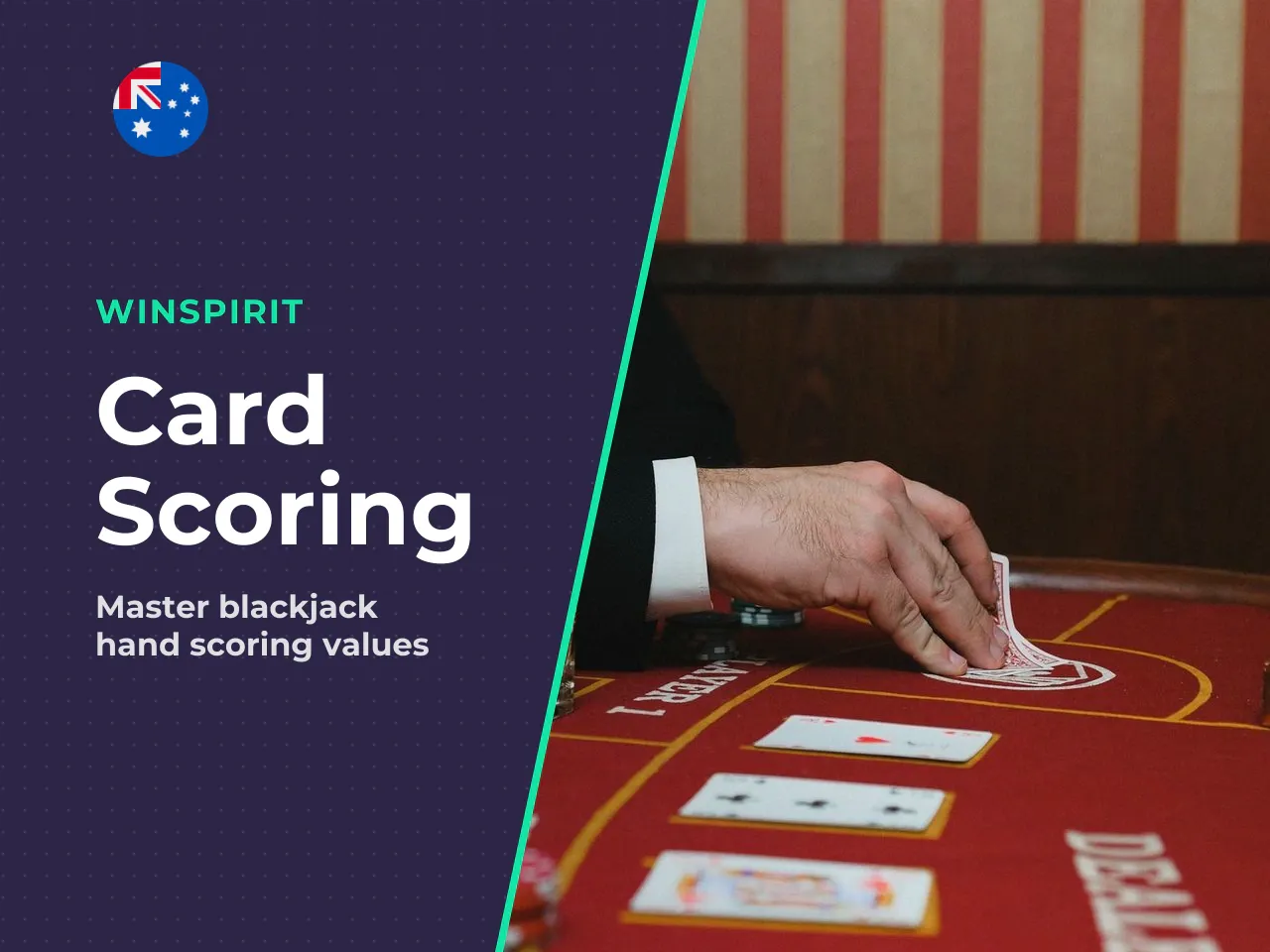
Cards two through ten carry their face value, face cards count as ten, and aces function as either one or 11. The values of cards are strict, governing how every card is counted toward the final sum.
An ace alters the total hand value based on the risk of a bust. If counting an ace as 11 creates a total over 21, the ace value automatically drops to one. A natural blackjack outcome consists of an ace and a ten-valued card dealt initially. This hand traditionally pays 3:2, though some commercial variants reduce this to 6:5. Reducing the payout from 3:2 to 6:5 increases the house edge by approximately 1.4 percentage points, a change that significantly erodes the player's long-term return. Worth repeating: always check the paytable before you sit down.
The deal, player turn and dealer turn
The round starts with two cards dealt to the player and the dealer, with one dealer card remaining hidden (known as the "hole card"). Players act first, followed by the dealer who must follow strict numerical house rules.
The dealer deals cards sequentially. The player reviews what the dealer has visible on the table. The turn order forces the player to finalise all decisions before the dealer acts. The dealer typically must hit on totals up to 16 and stand on totals of 17 or higher. This programmed behaviour provides the foundation for all player strategy.
Important note for European Blackjack: In European versions and some American "no hole card" games, the dealer does not check for blackjack before the player acts. This means a player who doubles down or splits may lose more than their original bet if the dealer subsequently reveals a natural. In these games, be more cautious about doubling and splitting when the dealer shows an ace or ten-value card. Understanding whether the table uses Original Bets and Busted Only (OBBO) rules helps manage this additional risk.
Winning hands, pushes and payouts
A standard winning hand pays 1:1, while a natural blackjack typically pays 3:2. If both totals match, the hand is a push and the original bet is returned.
The player beats the dealer by holding a higher valid total. The player loses when the dealer has a better valid total, or when the player busts. Blackjack real money payouts differ from regular wins primarily due to the natural blackjack bonus. Variations in payout rules heavily impact the long-term house edge. A seemingly small shift from 3:2 to 6:5 might not look dramatic on a single hand, but over a thousand hands the difference compounds noticeably.
| Outcome | Payout | Example |
|---|---|---|
| Standard win | 1:1 | $10 bet → $10 profit |
| Natural blackjack (3:2 table) | 3:2 | $10 bet → $15 profit |
| Natural blackjack (6:5 table) | 6:5 | $10 bet → $12 profit |
| Push (tie) | 0 | Original $10 bet returned |
| Insurance (dealer has blackjack) | 2:1 on side bet | $5 side bet → $10 return |
Player actions in blackjack: hit, stand, double, split and surrender
During a hand, players can change their risk level by choosing to hit, stand, double down, split pairs, or surrender. These actions represent the entire interactive core of a blackjack hand.
- Hit:Request a new card. Risk of busting increases with totals above 11.
- Stand:Finalise the hand. No additional cards.
- Double down:Double the bet for exactly one additional card. Best used when the player holds a strong starting total (9, 10 or 11).
- Split:Divide a pair into two separate hands, each with its own bet. Always split aces and eights.
- Surrender:Forfeit half the bet and end the hand immediately. Useful when holding a hard 16 against a dealer 9, 10 or ace.
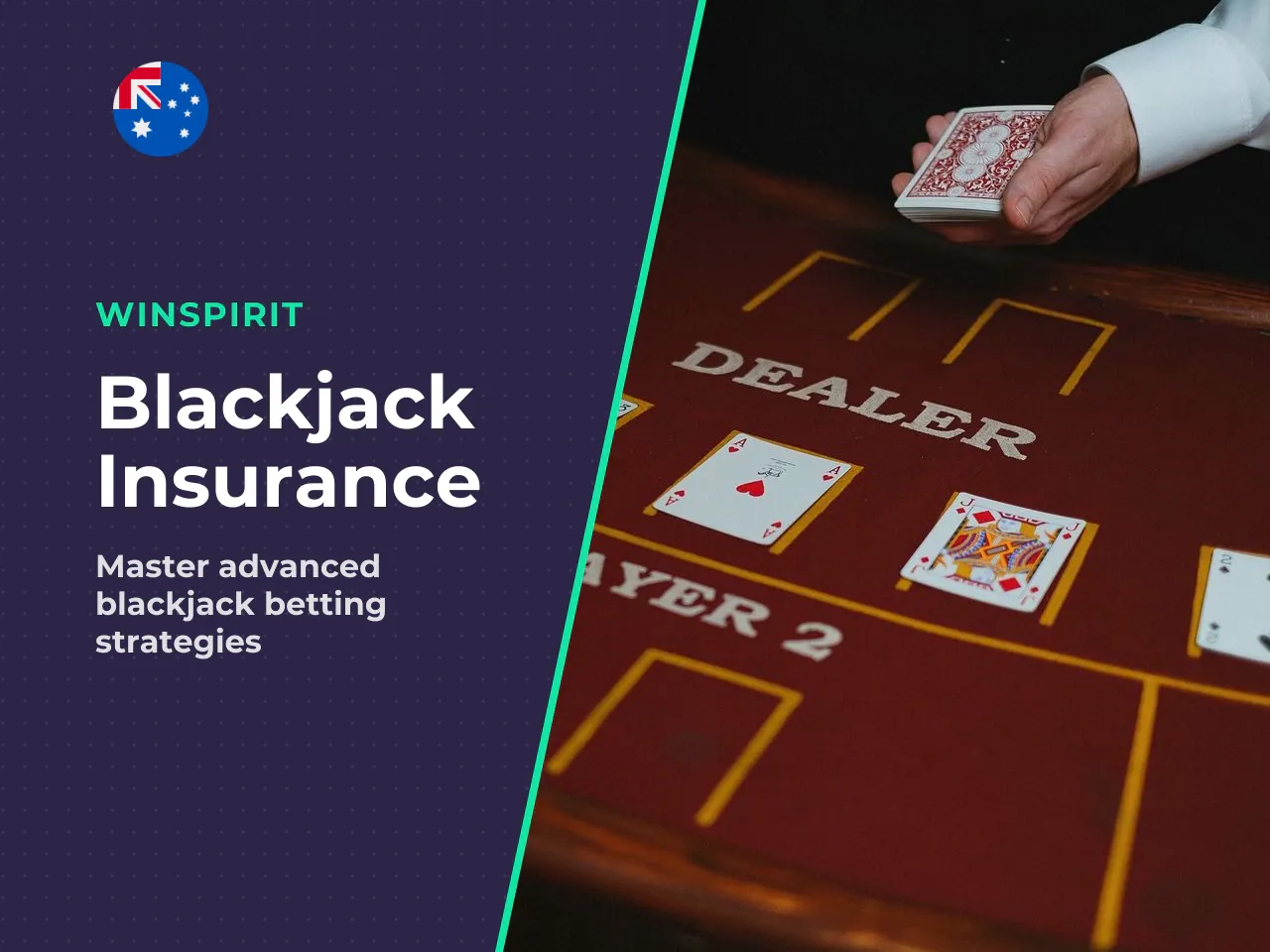
Taking insurance is an optional side bet offered when the dealer shows an ace. However, reinforcement-learning agents trained to maximise returns consistently decline insurance in standard play. It is a negative expected-value wager for basic-strategy players. - Agboola et al., Reinforcement Learning Study of Blackjack Decision-Making, 2023. https://arxiv.org/abs/2311.17305
Early surrender vs late surrender: Early surrender allows the player to fold before the dealer checks for blackjack, offering greater protection. Late surrender is only available after the dealer checks. Late surrender on a hard 16 against a dealer 10 saves roughly 0.08 per cent of house edge, a small but meaningful number over hundreds of hands.
When to hit, stand or double down
Hitting is optimal when your total is low, while standing is better when the dealer shows a weak card. Doubling down increases a bet in exchange for receiving only one additional card.
The dealer's upcard dictates the mathematical advantage. When the dealer has a weak card, usually defined as a two through six, the probability of a dealer bust rises to roughly 40 per cent. This figure is derived from standard probability tables that calculate the dealer's chance of exceeding 21 based on fixed hit-on-16 rules across common multi-deck games. Here, the player total guides hit-or-stand decisions toward conservatism. When the dealer shows a strong card (seven through ace), the player must aggressively hit to avoid being outdrawn.

How splitting pairs and surrender work
Splitting turns a single pair into two separate hands with two distinct bets, while surrender allows a player to fold a weak hand and keep half their stake.
Split rules generally mandate splitting aces and eights. Why eights? Because a pair of eights totals 16, the worst possible hand in blackjack, and splitting gives two fresh starts from 8. Splitting changes hands by breaking a weak combined total into two potentially strong bases. Pair decisions depend on what the dealer will do. Surrender is mathematically useful when holding a hard 16 against a dealer ten.
When splitting aces, most tables restrict the player to exactly one additional card per hand with no further hitting, doubling or re-splitting. Standard rules typically allow re-splitting up to three times (playing a maximum of four hands). The Charlie rule, where drawing a set number of cards (usually five) without busting triggers an automatic win, exists in some variants and can significantly reduce the house edge.
Basic blackjack strategy for better decisions
Basic blackjack strategy is a mathematically optimised set of decisions based on the player's hand and the dealer's visible card. Playing blackjack without this framework dramatically increases the house edge.
"Modelling blackjack as a sequential decision problem confirms that basic strategy reduces the house edge to roughly 0.5 per cent under favourable rules." - Agboola et al., Reinforcement Learning Study of Blackjack Decision-Making, 2023. https://arxiv.org/abs/2311.17305
The relation between the player hand and the dealer card dictates every move. A dealer has fixed rules; therefore, what the dealer will do is always a known probability. Strategy relies completely on categorising hard hands, soft hands, and pairs.
Hard hands, soft hands and pairs
A soft hand contains an ace counted as 11 without busting, whereas a hard hand lacks an ace or counts it as one. Pairs open the option to split the initial cards.
The difference between hard and soft hands changes hit decisions entirely. Because an ace offers flexibility, players should hit a soft 17 against a strong dealer card. Conversely, players must stand on a hard 17. Pair logic requires checking the dealer card before separating the hands. Strategy changes by hand type because the risk of busting is fundamentally different.
Hard hand decisions:
| Your hand | Dealer shows 2 to 6 | Dealer shows 7 to 8 | Dealer shows 9 to Ace |
|---|---|---|---|
| 8 or less | Hit | Hit | Hit |
| 9 | Double (hit if not allowed) vs 3 to 6; otherwise hit | Hit | Hit |
| 10 | Double (hit if not allowed) | Double (hit if not allowed) vs 7 to 8; hit vs 9 | Hit vs 10 to A |
| 11 | Double (hit if not allowed) | Double (hit if not allowed) | Double vs 10 (hit if not allowed); hit vs A |
| 12 | Stand vs 4 to 6; hit vs 2 to 3 | Hit | Hit |
| 13 to 14 | Stand | Hit | Hit |
| 15 | Stand | Hit | Hit vs 9, A; surrender vs 10 (hit if not allowed) |
| 16 | Stand | Hit | Surrender vs 9 to A (hit if not allowed) |
| 17+ | Stand | Stand | Stand |
Soft hand decisions:
| Your hand | Dealer shows 2 to 3 | Dealer shows 4 to 6 | Dealer shows 7 to 8 | Dealer shows 9 to Ace |
|---|---|---|---|---|
| Soft 13 to 14 (A-2, A-3) | Hit | Double (hit if not allowed) vs 5 to 6 | Hit | Hit |
| Soft 15 to 16 (A-4, A-5) | Hit | Double (hit if not allowed) | Hit | Hit |
| Soft 17 (A-6) | Hit | Double (hit if not allowed) vs 3 to 6 | Hit | Hit |
| Soft 18 (A-7) | Double vs 3 to 6 (stand if not allowed) | Double (stand if not allowed) | Stand | Hit |
| Soft 19+ (A-8+) | Stand | Stand | Stand | Stand |
Pair splitting decisions:
| Your pair | Dealer shows 2 to 6 | Dealer shows 7 | Dealer shows 8 to Ace |
|---|---|---|---|
| A-A | Always split | Always split | Always split |
| 8-8 | Always split | Always split | Always split |
| 10-10 | Never split, stand | Never split, stand | Never split, stand |
| 9-9 | Split vs 2 to 6 (stand vs 7) | Stand | Split vs 8 to 9; stand vs 10, A |
| 7-7 | Split | Split | Hit |
| 6-6 | Split | Hit | Hit |
| 5-5 | Never split, treat as hard 10 | Never split | Never split |
| 4-4 | Hit (split vs 5 to 6 if DAS allowed) | Hit | Hit |
| 3-3, 2-2 | Split vs 2 to 7 | Split | Hit |
Common mistakes beginners make
Beginners often make strategic mistakes like copying the dealer's fixed rules, taking insurance, or refusing to split eights. Poor reactions to the dealer's card cause unnecessary losses.
Players frequently mismanage bankrolls by placing bets without following basic blackjack strategy. If you are looking for platforms that include responsible gambling protocols, always verify deposit-limit tools and session timers before playing. A weak split or uncalculated double compounds the mathematical disadvantage.
"Casino games use fast pace and near-miss effects, reducing reflection time on decisions and spending, which amplifies financial harm." - Victorian Responsible Gambling Foundation, How Gambling Products Cause Harm, 2024. https://responsiblegambling.vic.gov.au/resources/publications/how-gambling-products-cause-harm/
The five most common beginner errors:
- Copying the dealer's rules (hitting to 16, standing on 17). This ignores the player's positional advantage in choosing when to stand.
- Taking insurance. A negative-EV side bet unless counting cards.
- Refusing to split eights. A pair of eights totals 16, the worst hand in blackjack, and splitting gives two fresh starts.
- Standing on soft 18 (A-7) against a dealer 9 or higher. The correct move is to hit, as soft 18 is not strong enough against those upcards.
- Betting more than 5 per cent of bankroll on a single hand. This leads to rapid bankroll depletion regardless of strategy skill.

E-E-A-T Fact Check:
- Myth: Basic strategy guarantees a win. Fact: Strategy only minimises expected losses. The maths yields a negative expected value long-term.
- Myth: Insurance helps most players. Fact: Reinforcement-learning studies confirm insurance is a negative expected-value bet unless the player is actively counting cards. - Agboola et al., 2023. https://arxiv.org/abs/2311.17305
- Myth: Live dealer changes the math. Fact: The format alters pace and variance, but the fundamental probabilities tied to the table rules remain identical.
- Myth: Card counting works online. Fact: RNG blackjack reshuffles after every hand, making card counting impossible. Live dealer games use large shoes (typically 6 to 8 decks) with frequent cuts, rendering counting impractical for most players.
How to play blackjack online: demo and live dealer modes
Playing blackjack online involves choosing between a risk-free demo environment or a live-streamed dealer table. The blackjack play journey changes significantly across these environments.
Blackjack demo formats function as practice tools using virtual credits. Blackjack live dealer rooms replicate a physical table-style experience for remote users. Accessing blackjack online generally requires checking legal availability, as offering real money online blackjack to Australians is restricted by law.
Why start with blackjack demo
A blackjack demo offers a risk-free way to practise basic strategy, understand hand mechanics, and test the pace of the game. Practice without risk protects novice players from immediate financial loss.
Learning blackjack rules and strategy before money play provides time to internalise decision charts. Testing actions and the pace of the game without pressure builds competence. However, a demo environment uses virtual credits. It does not train a player's emotional control under realistic financial pressure. Research from the Australian National University confirms that online casino games with real stakes are illegal for Australians, reinforcing that demo modes remain the only legal online format for local players. - ANU Research Report, Young Adults Gambling Online in the ACT, 2024. https://csrm.cass.anu.edu.au/research/publications/young-adults-gambling-online-act
Demo play effectively teaches three things:
- Mechanics literacy: paytable locations, interface controls and bet-sizing buttons.
- Strategy memorisation: practising decision tables until choices become automatic.
- Pacing awareness: understanding how fast RNG games move compared to live tables.
What demo play cannot do is replicate the dopamine-driven cycle of anticipation, reward and reinforcement that occurs when real money is at stake. Studies show players who practise with inflated demo credits tend to place significantly higher bets when transitioning to real money play. Something to keep in mind.
What to expect from live casino blackjack
Live casino blackjack connects players to a real dealer via video stream, creating a slower, more interactive table-style experience. The real-time dealer is on stream managing physical cards.
The live pace is substantially slower than algorithmic software. Industry analyses note live dealer tables rarely exceed 50 rounds per hour, while RNG games allow a single player to complete 200 to 600 hands per hour. - Victorian Responsible Gambling Foundation, How Gambling Products Cause Harm, 2024. https://responsiblegambling.vic.gov.au/resources/publications/how-gambling-products-cause-harm/
Interaction with the dealer's table flow requires placing bets within a hard time limit. The primary difference from RNG blackjack games is the usage of Optical Character Recognition (OCR) technology to translate physical cards into the digital interface. The slower pace provides more reflection time per decision, which can reduce impulsive errors, especially for players still memorising basic strategy. If you find yourself rushing decisions in RNG mode, live dealer might actually suit you better.

Blackjack real money: what changes before you place a bet
Moving to blackjack real money introduces financial risk, emotional stakes, and strict legal considerations. The blackjack real money experience radically alters user behaviour compared to free formats. According to the National Gambling Prevalence Study Pilot 2024, 65.1 per cent of adult Australians participated in at least one form of gambling in the preceding 12 months. - Australian Institute of Family Studies, National Gambling Prevalence Study Pilot 2024. https://aifs.gov.au/resources/research-reports/national-gambling-prevalence-study-pilot-2024
The role of bets and betting decisions shifts when capital is on the line. Bankroll risk leads to emotional reactions. Users switch from a blackjack demo to blackjack casino play seeking monetary outcomes, often influenced by offer-driven value before the first deposit. Unregulated offshore operators target users, prompting necessary caution.

Demo vs real money blackjack
Demo play removes financial pressure, while real money play triggers emotional responses that can cause a player to deviate from basic strategy. Stake involvement inherently changes decision-making.
The transition from demo success to real play is difficult because risk-free play fosters psychological habits, like aggressive bet sizing and inflated risk tolerance, that do not transfer to real-money environments where financial pressure dramatically changes the decision-making process. Setting strict deposit limits prior to real play is essential. The emotional difference reduces strategy discipline. What a player should know before moving to money play is that demo credits encourage high-risk behaviour that becomes dangerous when real bets are placed.
Recommended transition steps:
- Master strategy tables in demo until decisions are automatic.
- Set a deposit limit using the casino's responsible gambling tools. Treat your first real deposit as "training capital" ($20 to $50).
- Play minimum-bet tables for at least two full sessions before increasing stakes.
- Never chase losses: if the session budget is gone, stop.
What to check before choosing a blackjack casino
Choosing where to play blackjack online requires verifying licensing, transparent bonus terms, payment reliability, and responsible gambling tools. Safety must precede game availability.
"Lower-risk gambling guidelines recommend spending no more than 2 per cent of after-tax income and gambling no more than once per week." - Victorian Responsible Gambling Foundation, Lower Risk Gambling Guidelines, 2024. https://responsiblegambling.vic.gov.au/reducing-risk/lower-risk-gambling-guidelines/
Before choosing where to play, check the game options, the presence of live tables, and the speed of payments. Bonuses require strict scrutiny of wagering requirements, scope, and expiry caps. Support quality, security, and operator transparency remain the clearest indicators of trustworthy platforms.
Blackjack and bonus wagering (game weighting): At the vast majority of online casinos, blackjack bets contribute only 5 to 10 per cent toward bonus wagering requirements, compared with 100 per cent for slots. Some operators exclude blackjack from bonus play entirely. Always read the terms and conditions before accepting a welcome offer. Here is a practical example: a $200 bonus with 35x wagering and 10 per cent blackjack contribution means you would need to wager $70,000 at the tables to clear the bonus. That is not a typo.
Pre-deposit checklist:
- Licence verified in the regulator's public register (e.g. MGA, UKGC, Curaçao).
- RTP independently audited (eCOGRA, iTech Labs, GLI).
- Withdrawal limits and processing times clearly published.
- Blackjack game weighting stated in bonus T&C.
- Responsible gambling tools available: deposit limits, session timers, self-exclusion.
- Dealer rules specified per table: S17 vs H17, surrender availability, number of decks.

E-E-A-T Legal Disclaimer: Real money play carries severe financial risks. Casino table games are mathematically designed to generate long-term profits for the house. Providing real money interactive casino games to individuals physically present in Australia is prohibited under the Interactive Gambling Act 2001. Promotional terms, the availability of a live casino, and game rules vary critically by jurisdiction and platform. Set strict deposit limits before participating. The information in this guide is general in nature and does not replace the advice of a qualified financial or legal professional.
Popular blackjack games and rule variations
Popular blackjack games like European Blackjack and Blackjack Switch alter standard rules, which directly impacts the house edge and player decisions. Rule variations affect dealer behaviour and available player options.
Understanding why blackjack is not identical across tables requires checking the fine print. Online and live differences often come down to side bets and payout ratios. Blackjack games and variants manipulate payout maths to balance player appeal against casino margin.
Why rules differ between blackjack games
Rule variations, such as the dealer hitting on a soft 17 or the restriction of surrender, exist to balance casino profitability with player appeal. These structural shifts change the game fundamentally.
Differences in what the dealer is forced to do shift the maths. Hitting on a soft 17 increases the house edge by approximately 0.2 per cent, and paying 6:5 instead of 3:2 on a natural blackjack adds roughly another 1.4 per cent. These are the two most impactful rule variables a player should check before sitting down. - Victorian Responsible Gambling Foundation, How Gambling Products Cause Harm, 2024. https://responsiblegambling.vic.gov.au/resources/publications/how-gambling-products-cause-harm/
The number of decks, split caps, double options, and surrender availability all manipulate expected value. Casinos adjust these metrics to manage their margin across different games.
Popular variants at a glance
| Variant | Decks | Key rule difference | Approximate RTP |
|---|---|---|---|
| Classic Blackjack | 1 to 8 | Standard rules, 3:2 payout | ~99.5% |
| European Blackjack | 2 | No hole card; dealer does not check for blackjack. Doubling restricted to 9, 10 or 11. | ~99.6% |
| Vegas Strip Blackjack | 4 | Dealer stands on all 17s; doubling on any two cards. | ~99.65% |
| Atlantic City Blackjack | 8 | Late surrender allowed; dealer stands on all 17s. | ~99.65% |
| Blackjack Switch | 6 to 8 | Player receives two hands and may swap second cards. Natural pays 1:1; dealer pushes on 22. | ~99.87% |
| Double Exposure | 6 to 8 | Both dealer cards face up; naturals pay 1:1. | ~99.33% |
When choosing a variant, prioritise tables that pay 3:2 on naturals, allow the dealer to stand on soft 17, and offer surrender. These three rules combined produce the lowest possible house edge for a basic-strategy player. If you can only remember one rule to check, make it the natural blackjack payout.
FAQ about blackjack online play
Is blackjack demo the best place to learn?
A blackjack demo is the best environment for learning rules and mechanics, though it cannot replicate the emotional pressure of real money bets. A demo helps most when testing system inputs.
It teaches a player about blackjack rules, paytable locations, and basic hand decisions. This format provides immense value when memorising strategy actions. It is enough before moving further only mechanically; it completely fails to train users on responsible strict bankroll management under stress. Think of demo play as learning to drive in an empty car park. Essential for getting the basics right, but no substitute for real traffic.
Does blackjack strategy work in live dealer games too?
Basic blackjack strategy remains mathematically valid across live dealer and online casino formats because the underlying rules dictate the odds. Strategy applies perfectly across blackjack live casino formats.
The maths relies entirely on table rules. What stays the same when the dealer is live is the fixed probability of drawing specific values. What still depends on rules relates to payout shifts, soft 17 behaviour, and split restrictions. At optimal basic strategy on a standard live table (eight decks, dealer stands on soft 17, double after split allowed), the house edge sits at 0.4 to 0.6 per cent, identical to the same rule set in RNG format. Regardless of the streaming interface, players must adhere to strategy to properly mitigate the house edge.
What is a strategy calculator and should I use one?
A blackjack strategy calculator is an online tool where you input the dealer's visible card and your hand, and it returns the statistically optimal action. If you are still memorising the basic strategy table, a calculator provides real-time confirmation of correct decisions. The rule of thumb when you cannot calculate: assume the dealer's hidden card is a 10 and decide accordingly. It is not perfect advice, but it keeps you out of the worst trouble.
Can I count cards in online blackjack?
Card counting is a legitimate technique in land-based casinos with manual shoes, but it is effectively useless online. RNG blackjack reshuffles after every hand, eliminating any deck penetration advantage. Live dealer games use large shoes (6 to 8 decks) with frequent cuts and shuffles, making counting impractical for recreational players. No online format provides conditions favourable to card counting.
Last updated: July 2026. This guide is reviewed quarterly to reflect changes in Australian gambling legislation and industry practice.